PIONEERS
- the finest
Terylene trousers
in the country!
Let's see what it consists of
and how it is created.
1
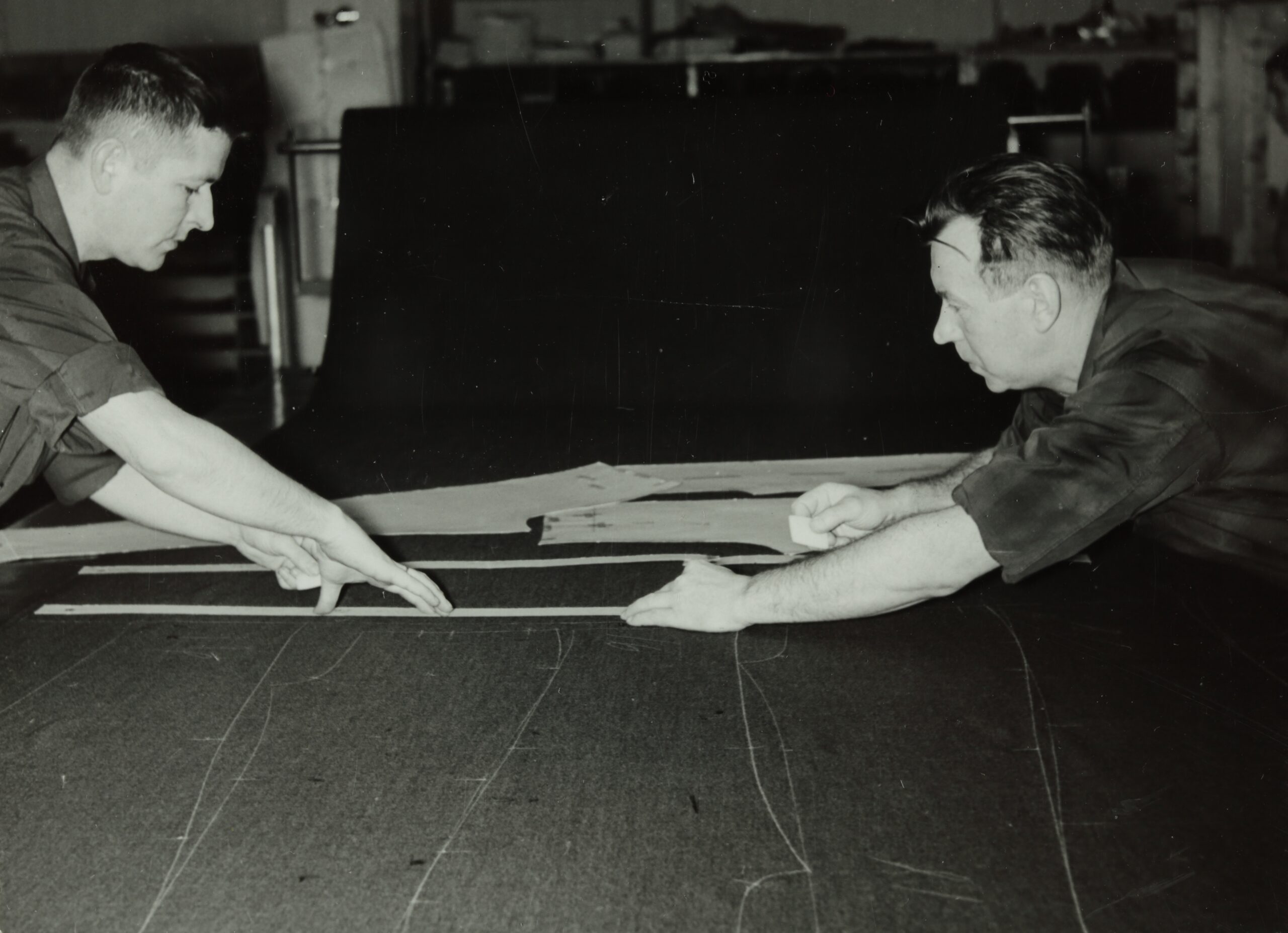 When the fabric for our PIONER trousers arrives at the factory, it first goes to cutting, where we find Sverre Aase and Knut Haukali busy drawing in the various parts using cardboard stencils. Naturally, it is very important that the use of the fabric is as rational as possible. Once the cutters have cut out the parts - in 20 to 50 layers at the same time - they are numbered and bundled together before going into production.
2
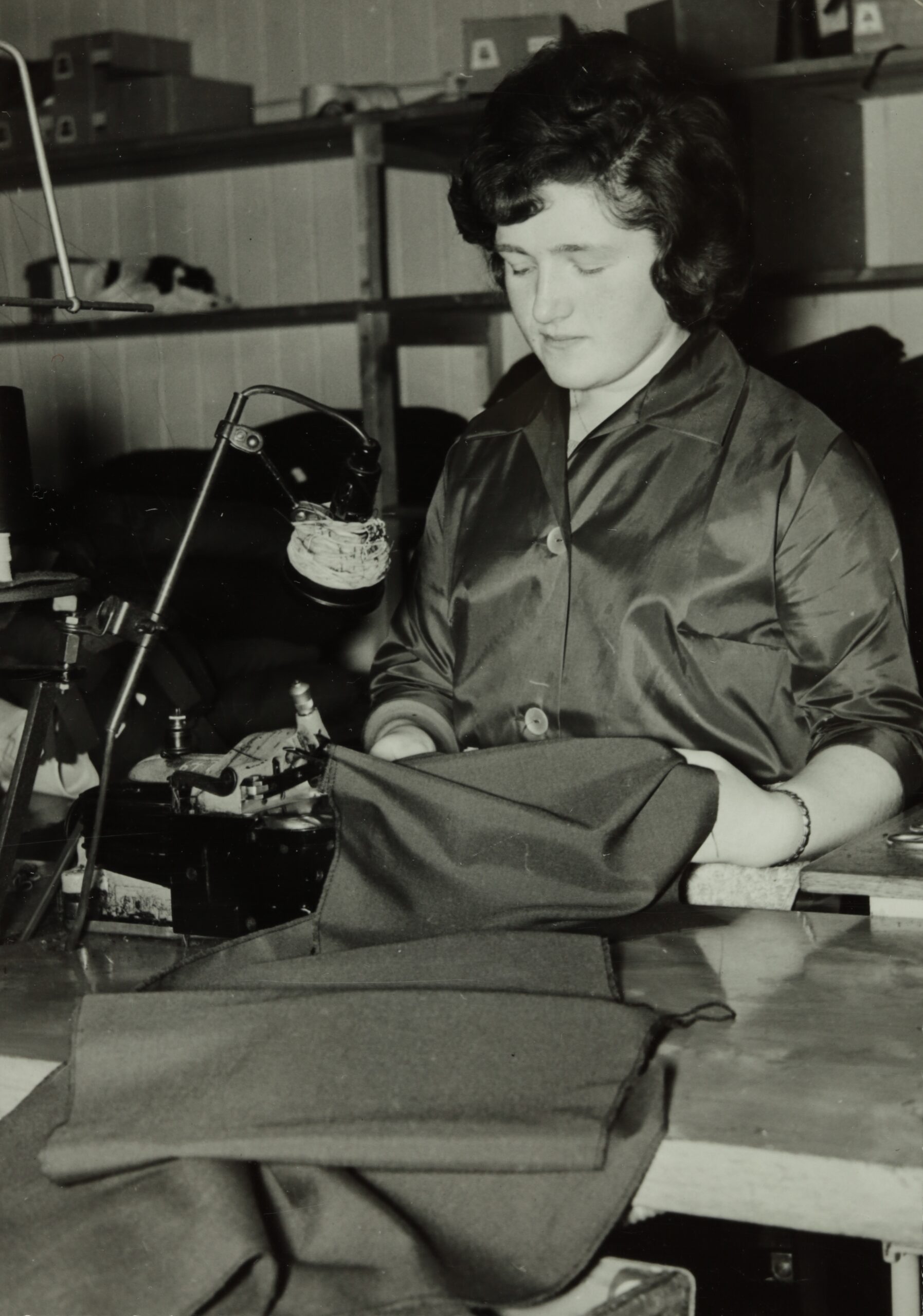 The first thing we encounter in the seam room is Signe Salte, who «overlocks» all the seams that are open in the trousers. A safety measure to prevent these seams from unraveling.
3
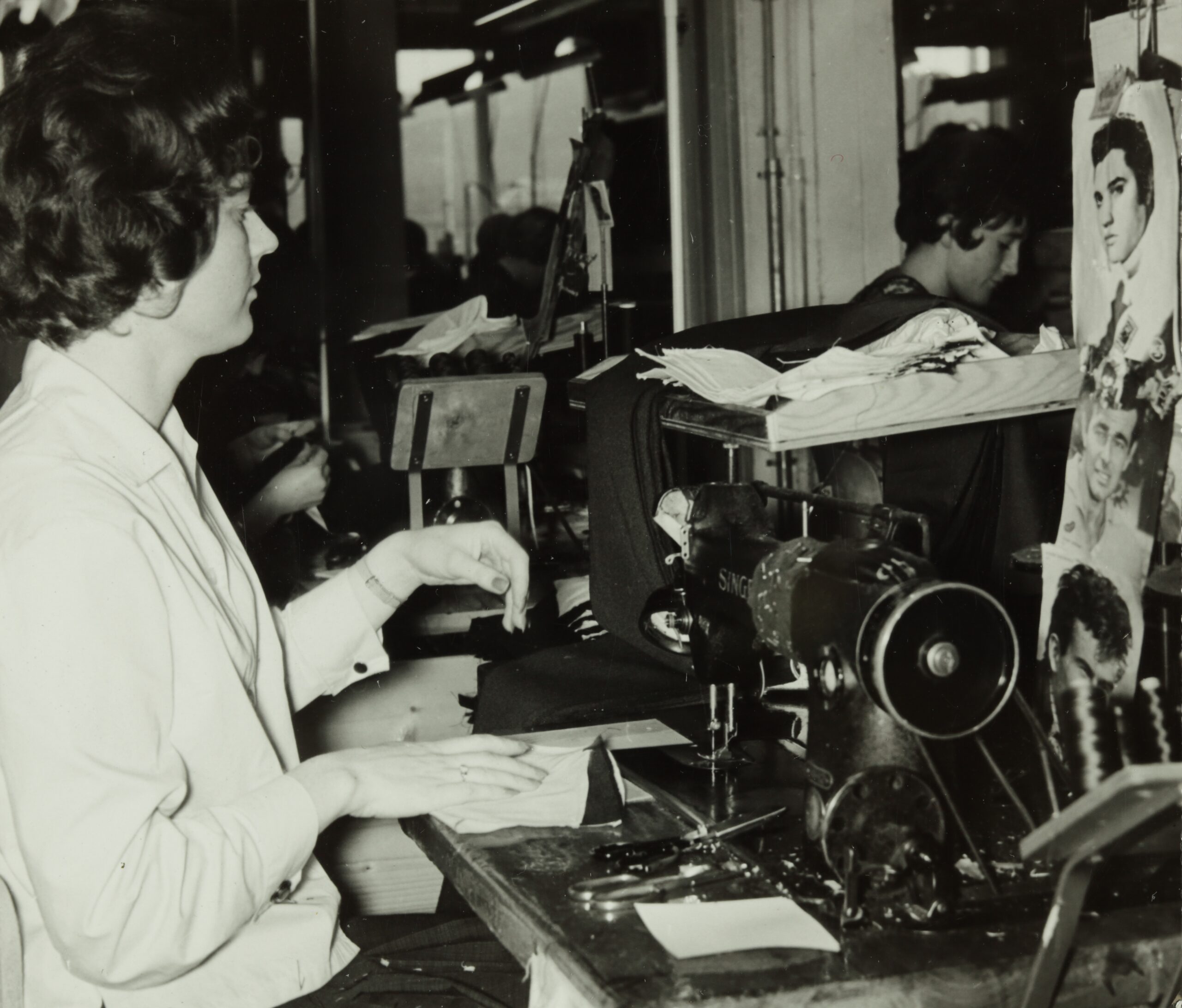 Naturally, trousers must have pockets, and here we have Bjørg Grøtteland with the bottoms of the front pockets, which she sews to the front piece.
4
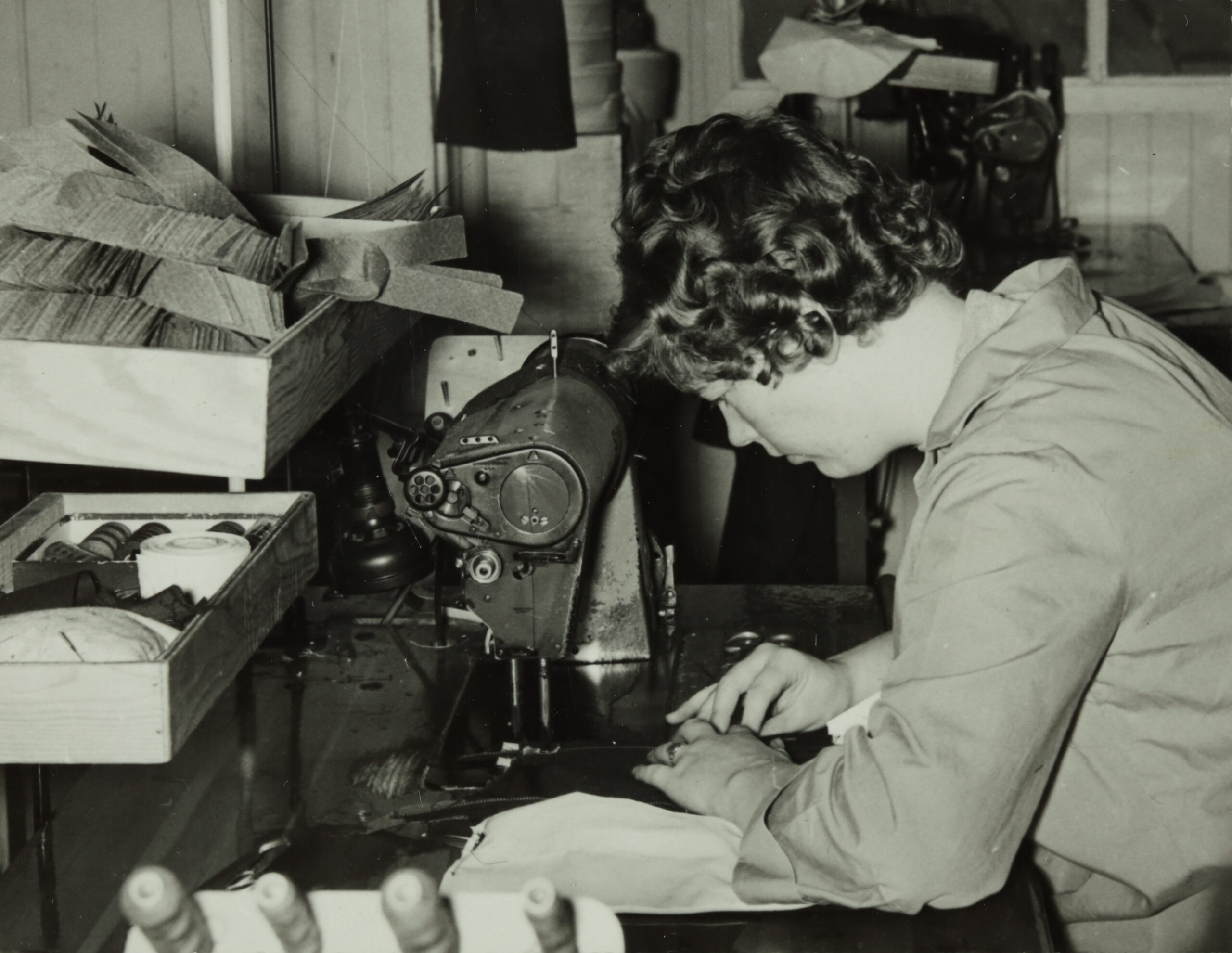 Karen Lunde puts flies in our trousers. We use zippers, and statistics tell us that we use around 800,000 zippers in production every year, without Karen sewing them all herself.
5
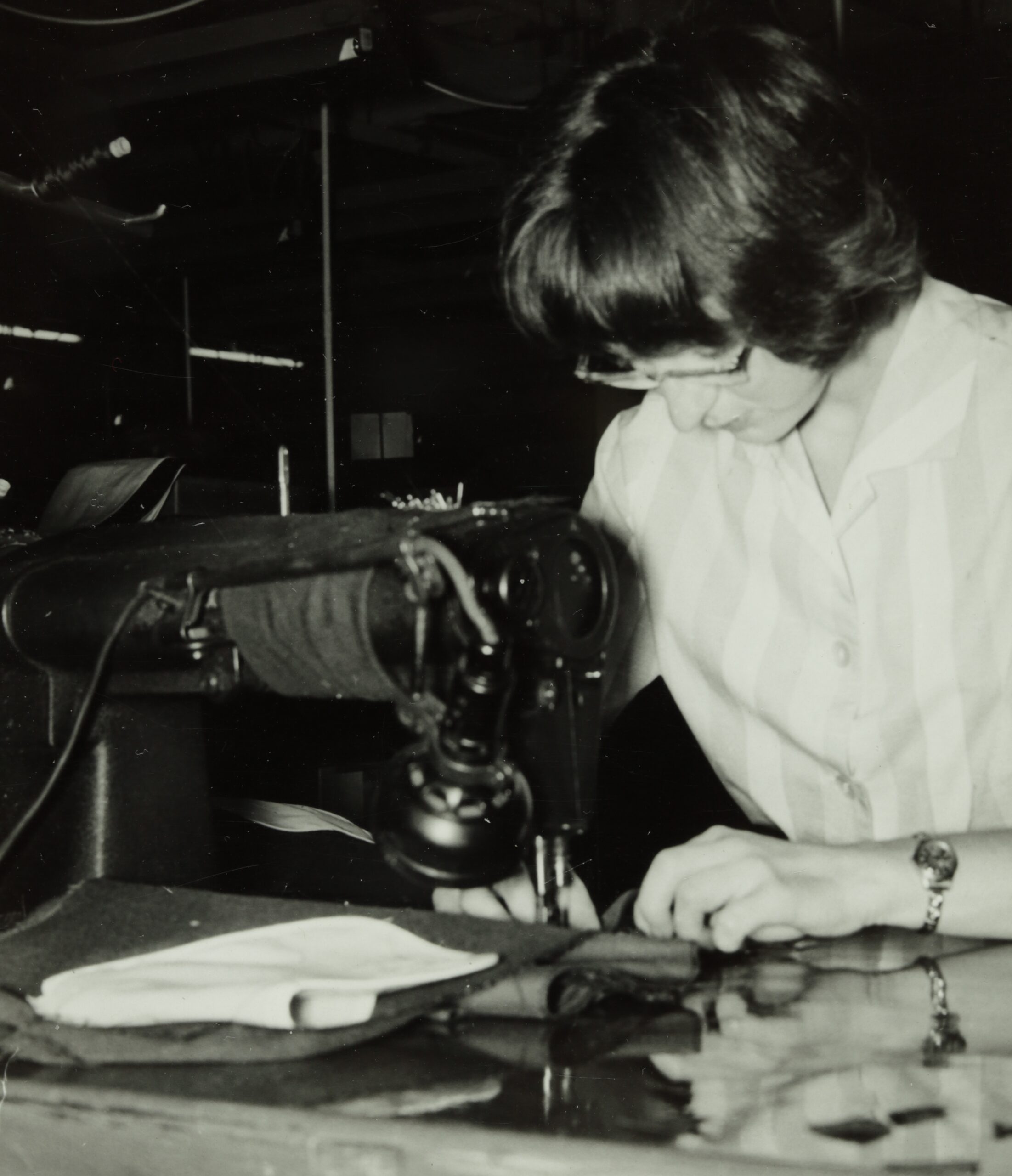 Here is Torfrid Fosse with the back piece, which in the meantime has been given a special press that stretches and shapes it for greater mobility. Torfrid's task is to sew the first part of the two back pockets with her special machine.
6
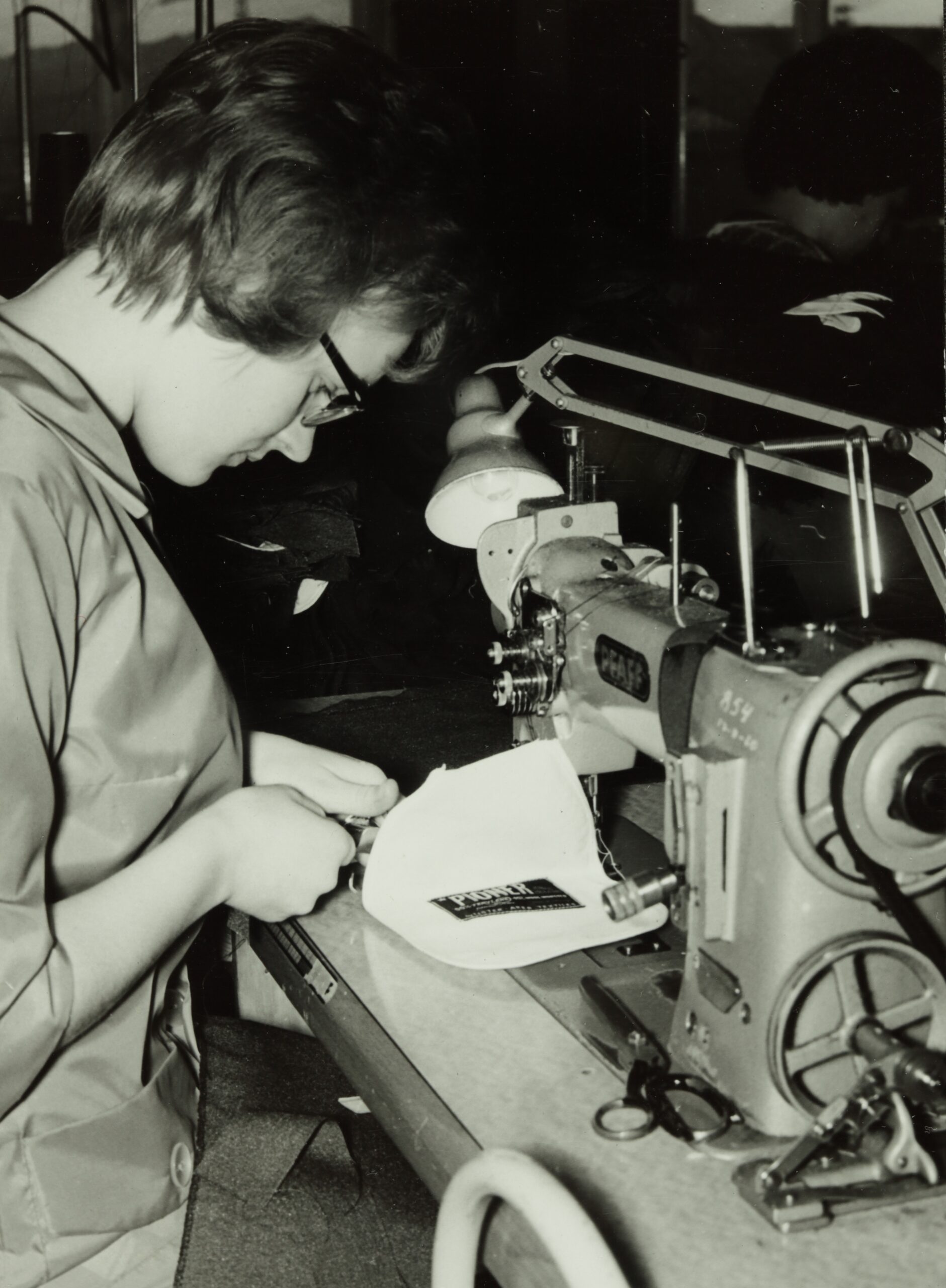 Then Eli Jørgensen takes over to finish the back pockets. She stitches around the welt pockets - that is, she sews extra around the edges of the pocket opening itself to reinforce it.
7
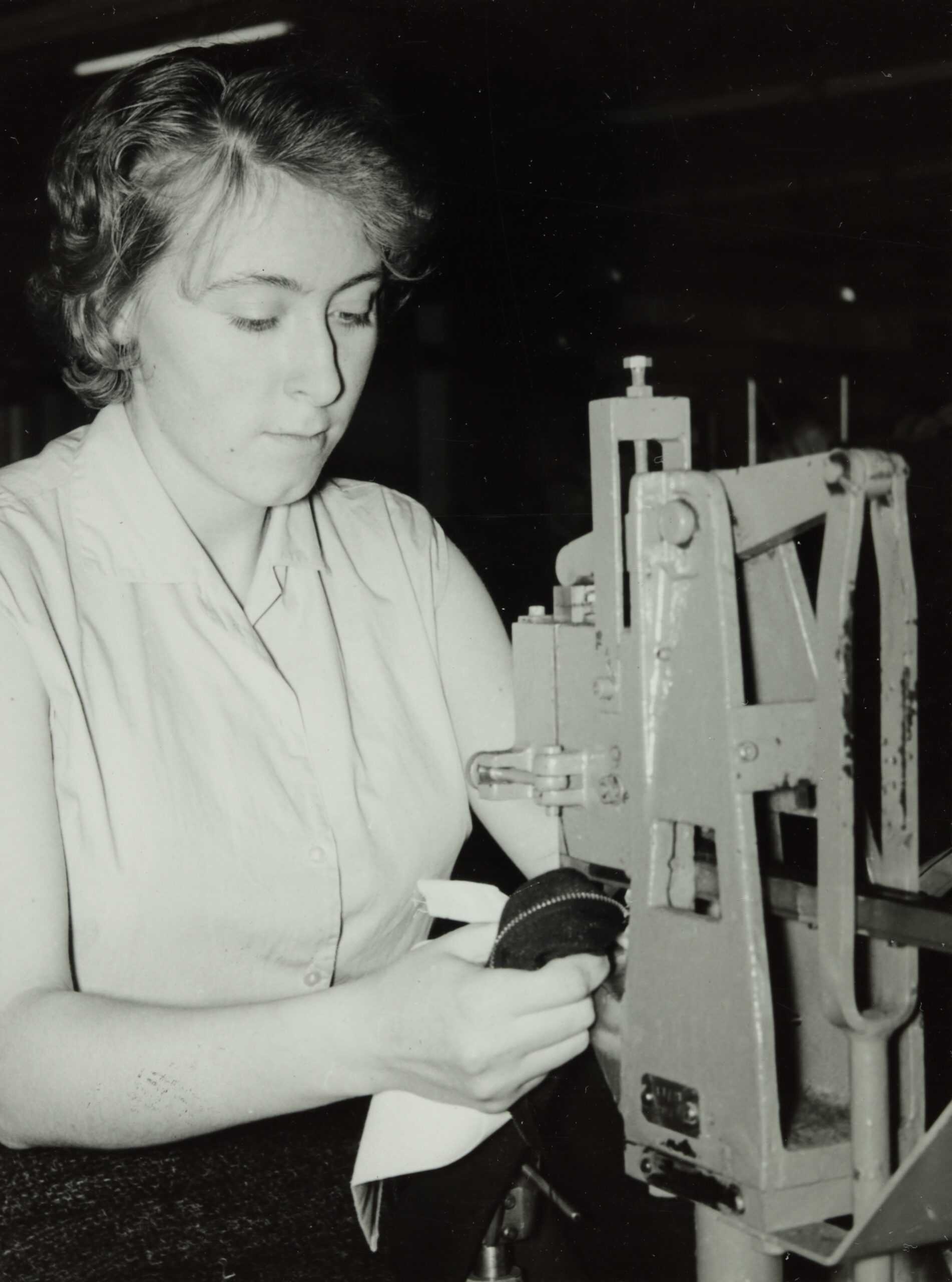 When the fly has been sewn and pressed, the trousers go to Bjørg Nordbø which fastens the zipper together and inserts the slider that we use to open or close the zipper.
8
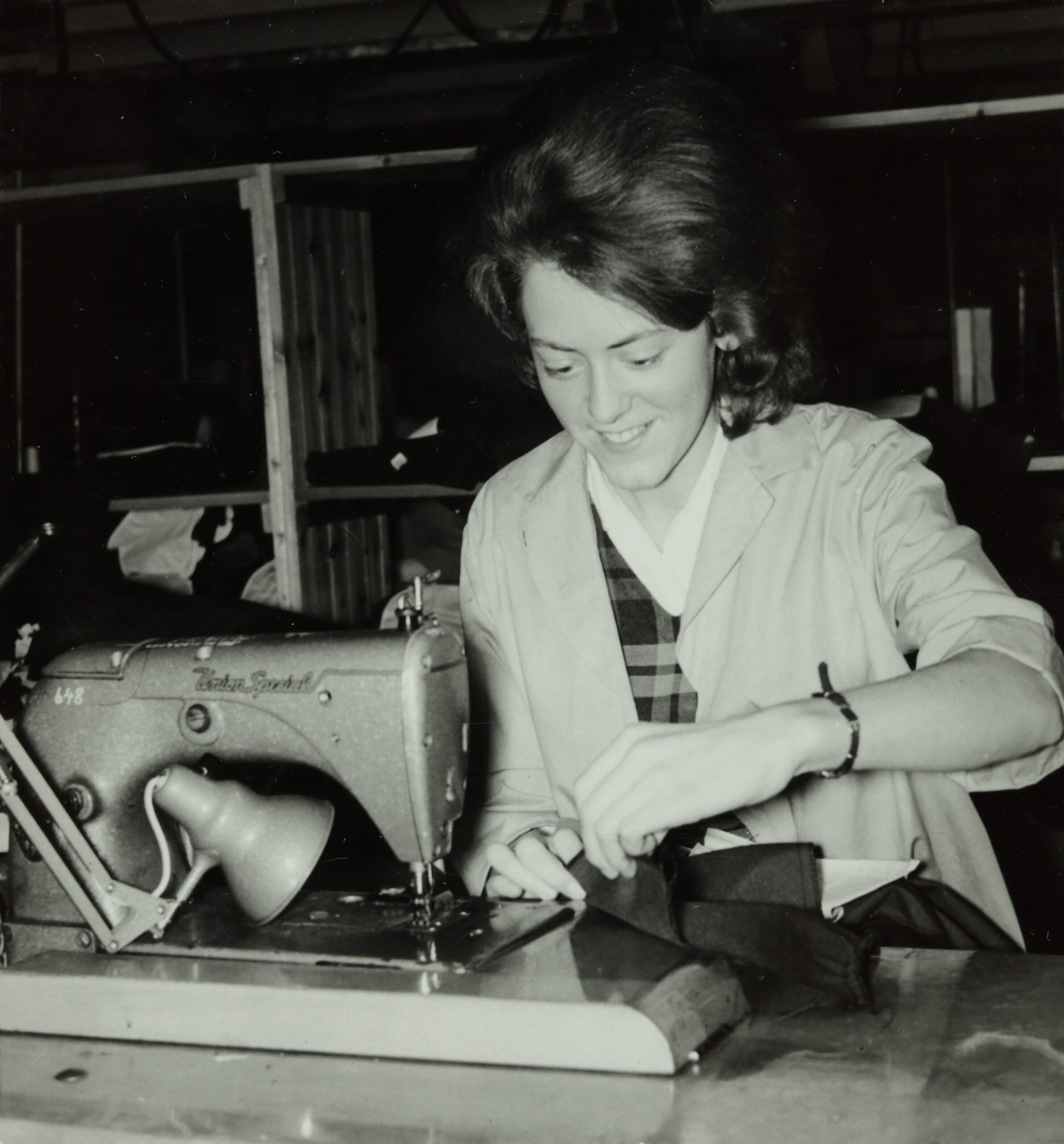 Now it is Jenny Tengesdal's turn, she sews the front and back together, and is thus the one that creates the first real impression of a pair of trousers.
9
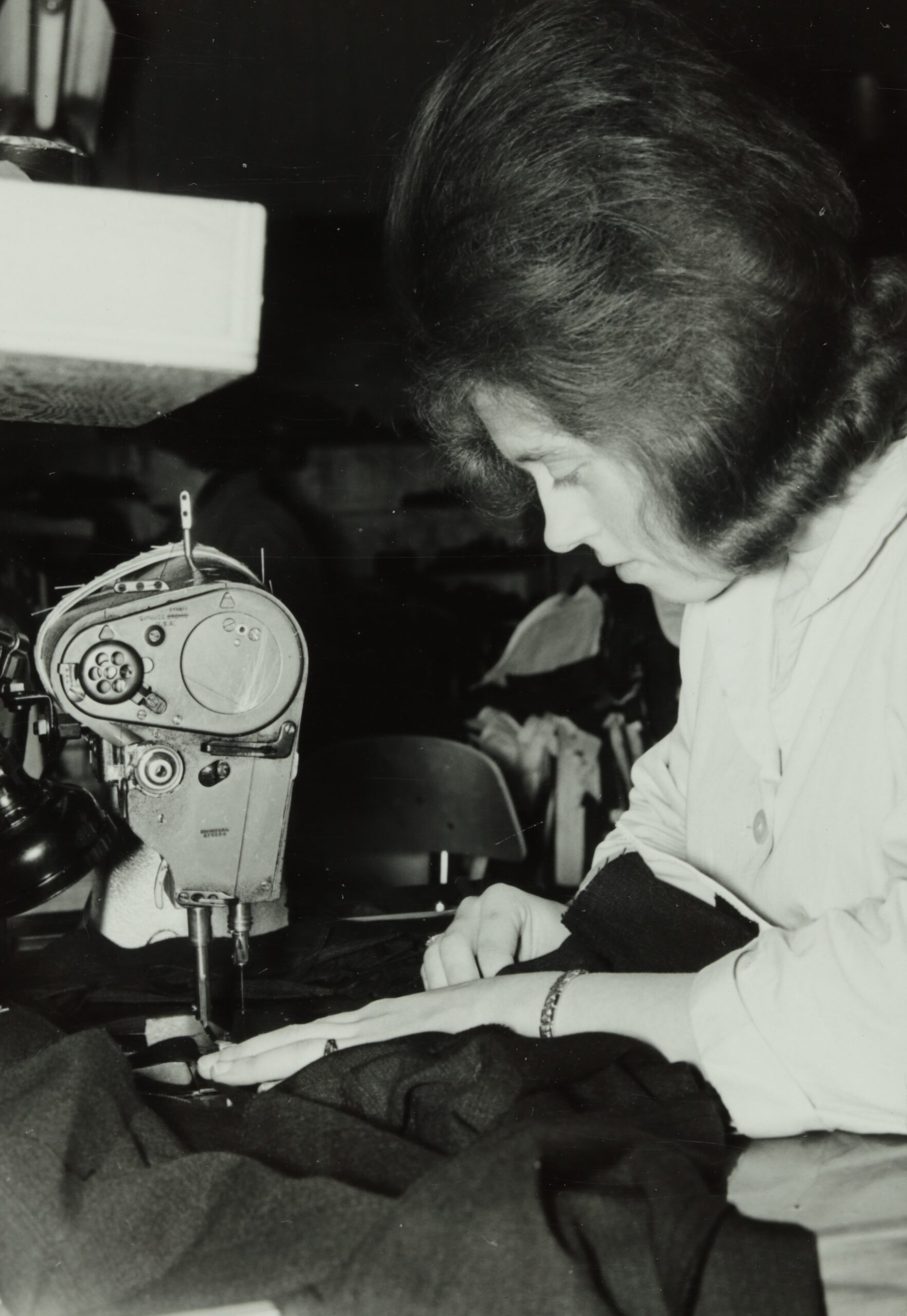 Then Reidun Stangeland sews on the outer waistband, which is the «band» that sits at the top of the waist of the trousers.
10
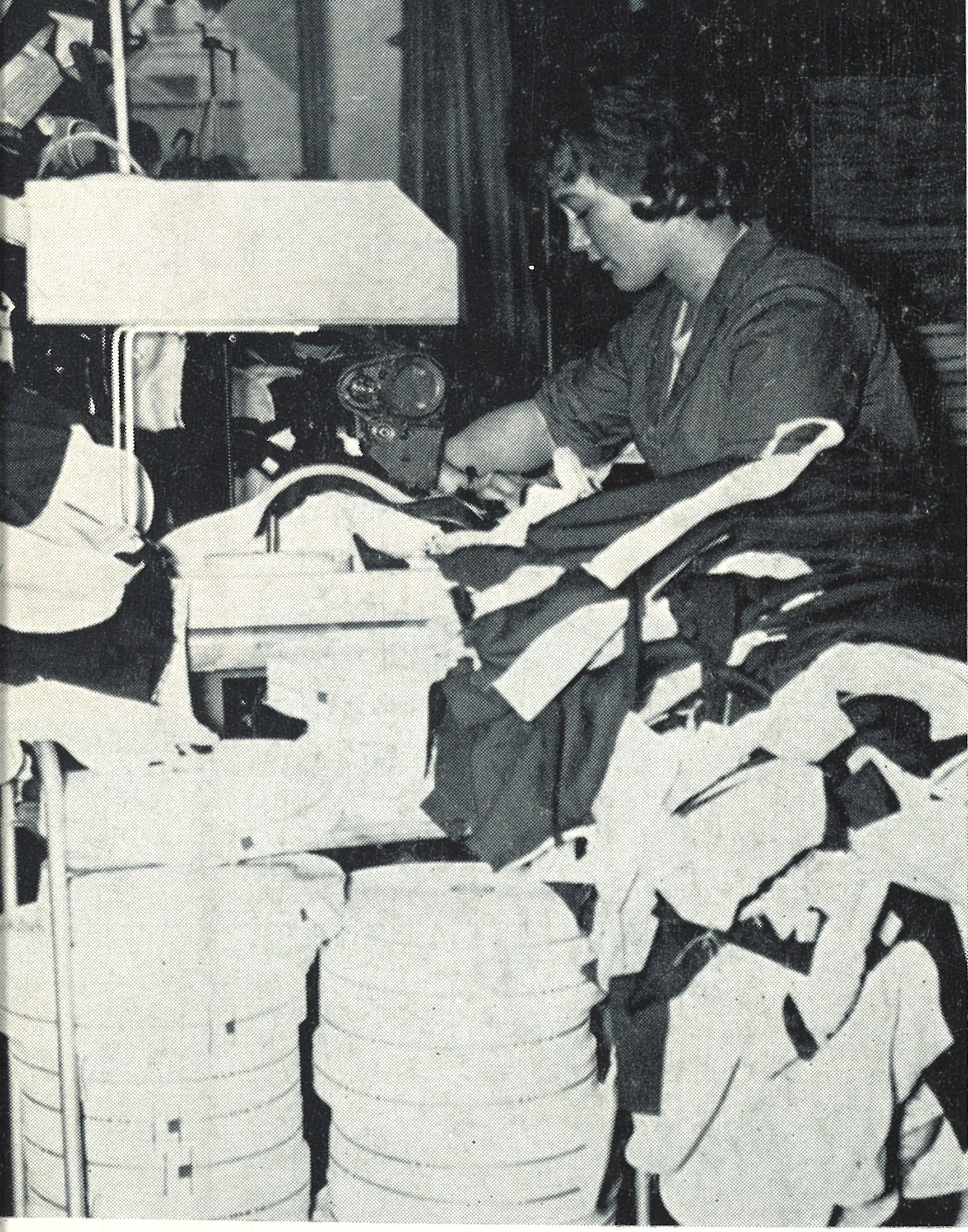 Of course, our waistband also needs to be lined, and Reidun Engedal does this next (as we can see, she has a supply of raw material for this purpose in the foreground). This lining also has an inlaid welt, which makes the finished waistband stiffer and neater.
11
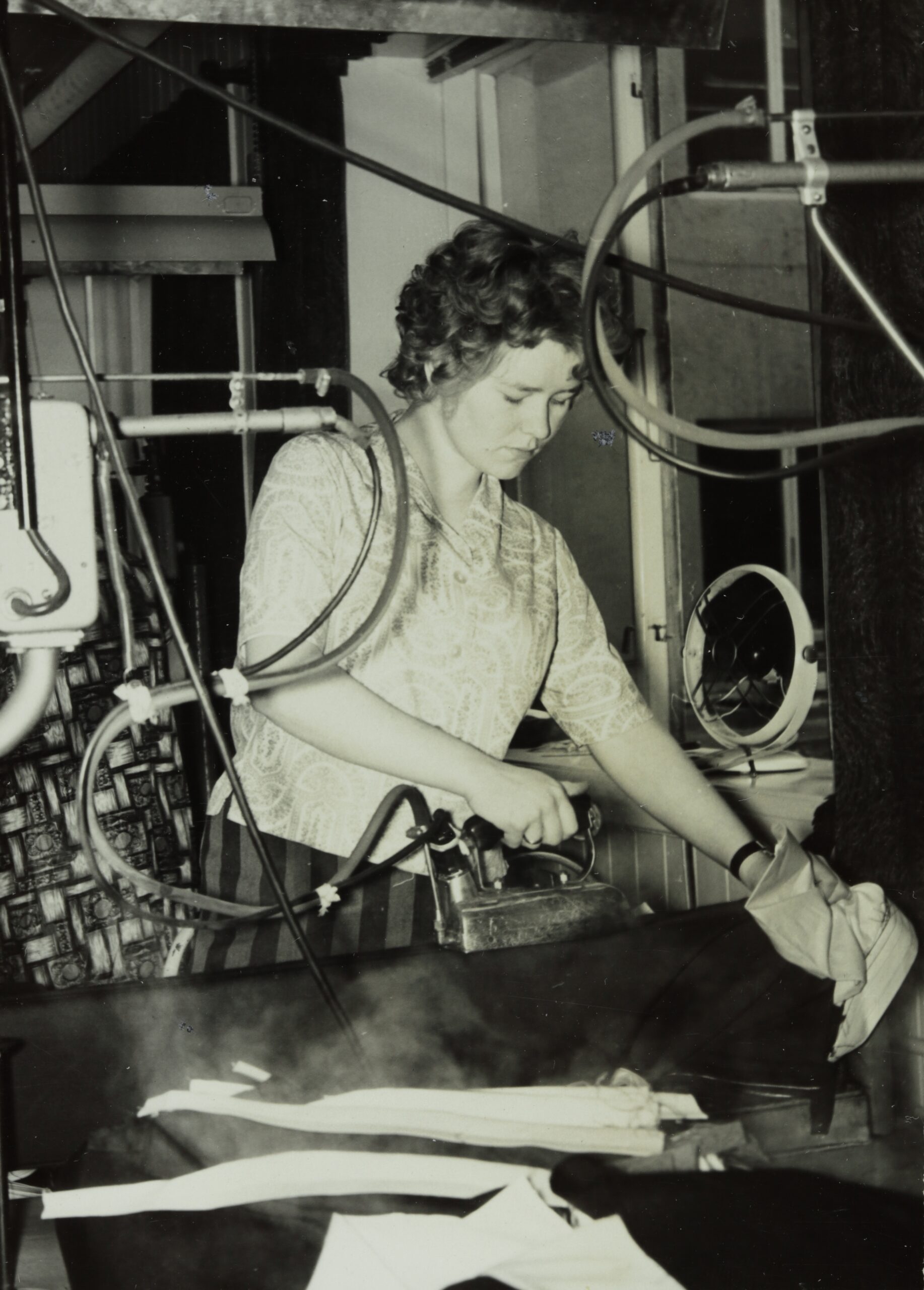 Now Liv Kleppa can start pressing the long seams and the waistband - the long seams are the seams that are used to sew the front and back of the trousers together.
12
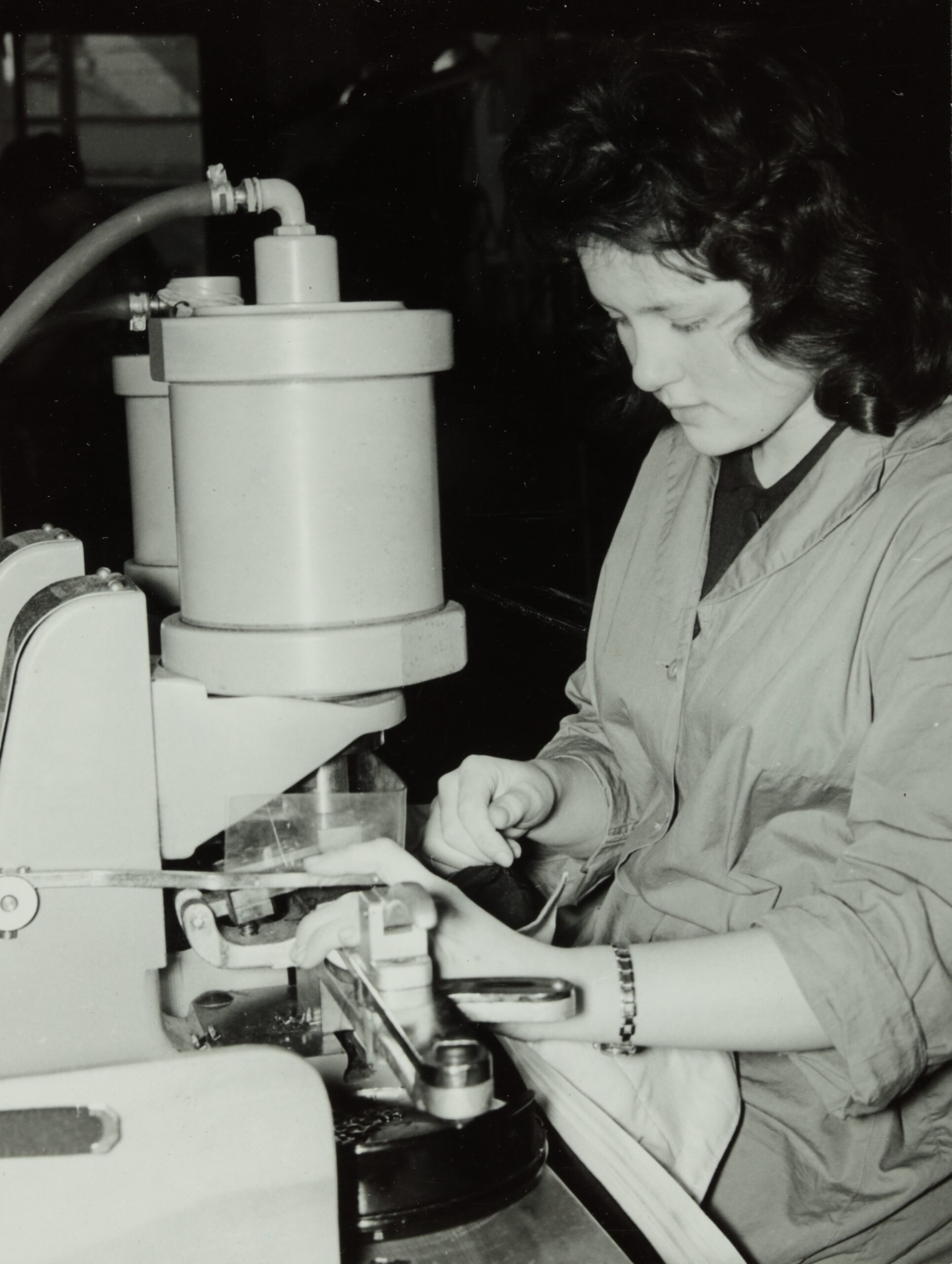 To hold the trousers up at the waist, we use hooks and eyes, available from Tyra Randi Liland who has an air pressure machine to help in her work. We use two hooks and two eyes, and these comprise a total of 8 units.
13
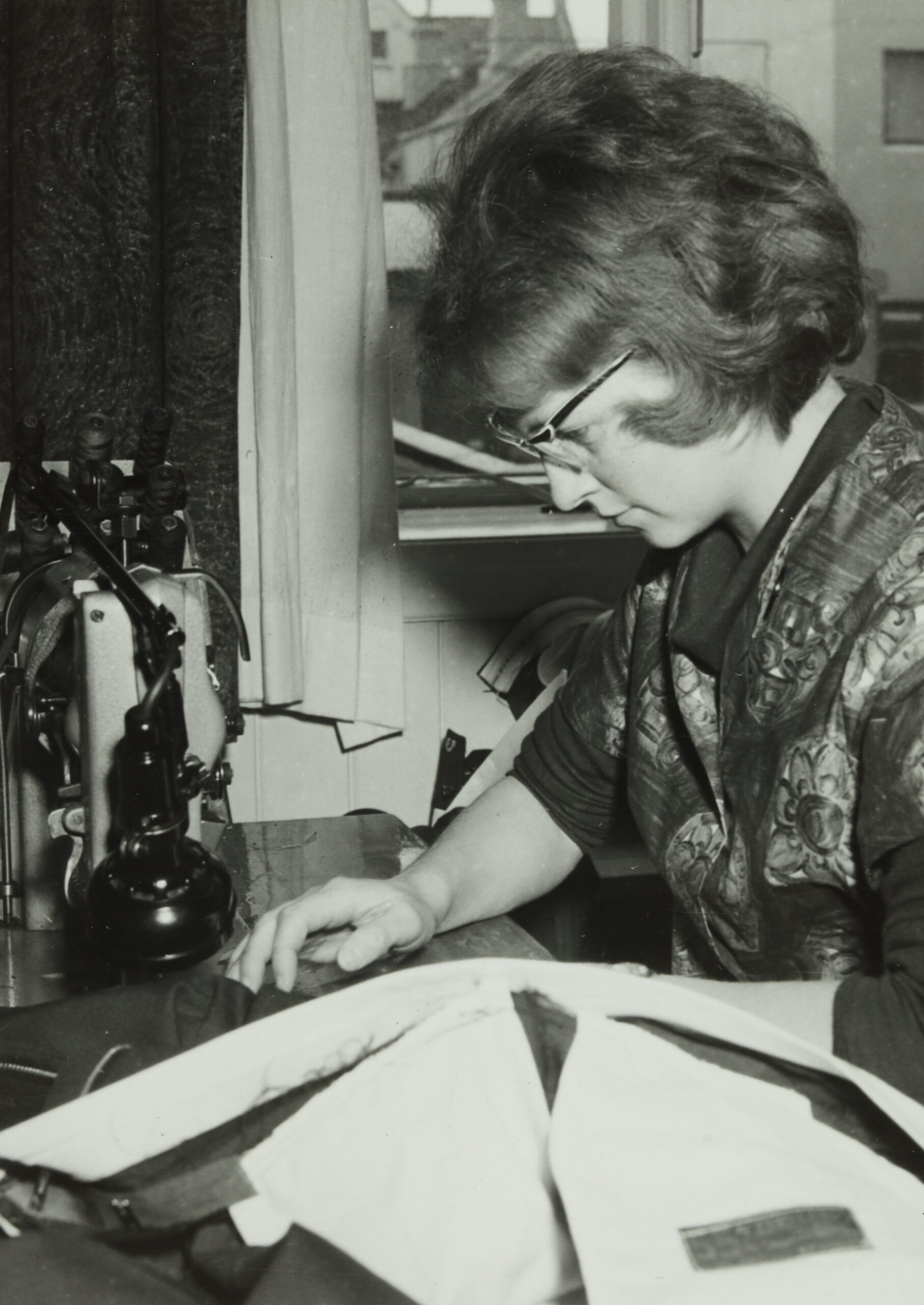 This completes the waistband, but first Solveig Stensen needs to «topstitch» it at the bottom edge where it is attached to the trousers, i.e. she reinforces the seam here.
14
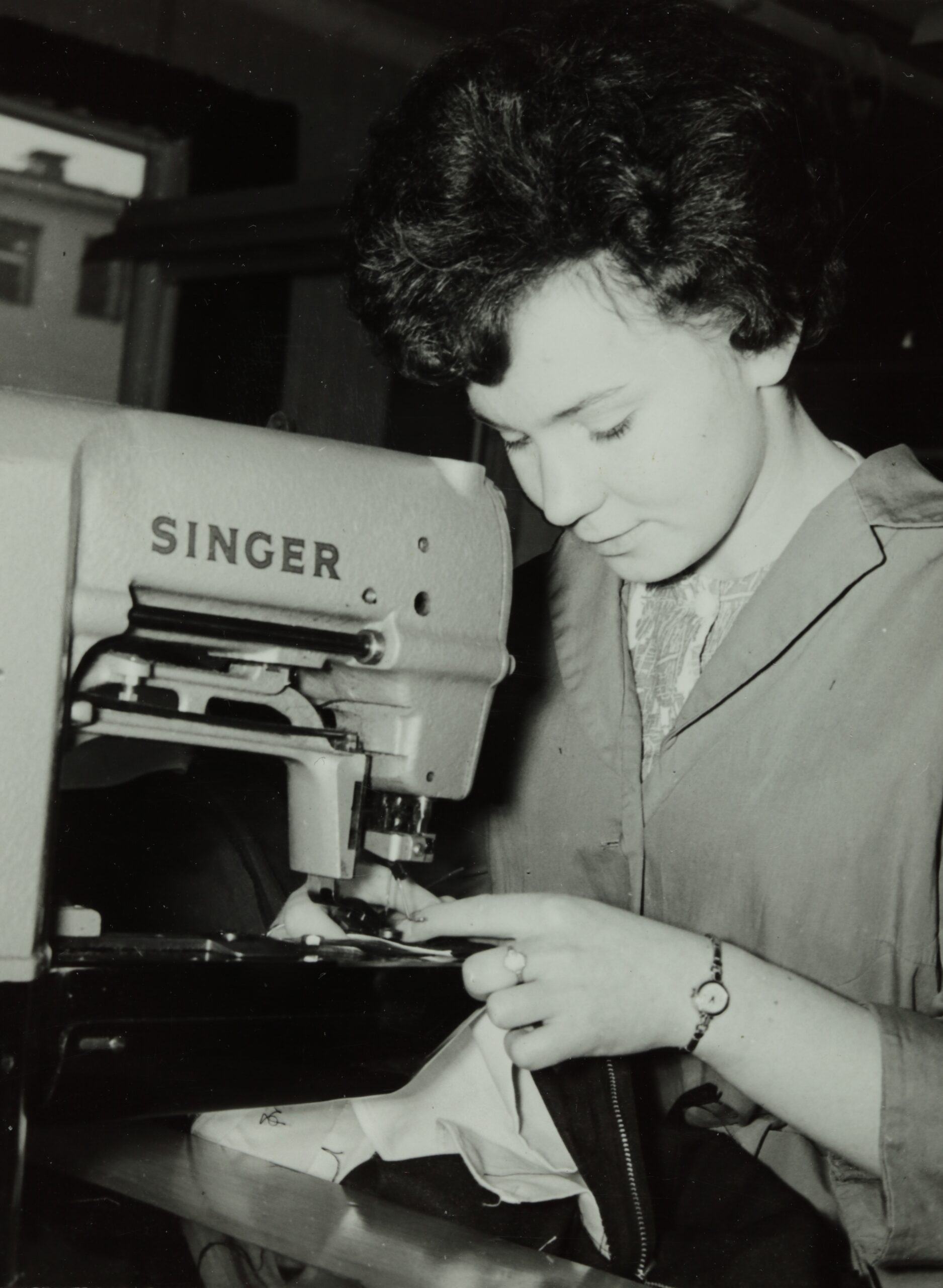 Naturally, some parts of trousers are more susceptible to wear and tear than others. Take the pockets, for example. If you look at the top and bottom of the opening to the front pockets, you'll see that there is an extra strong and tight seam. It's a welt seam, and it's Aud Berit Kyllingstad who is behind it.
15
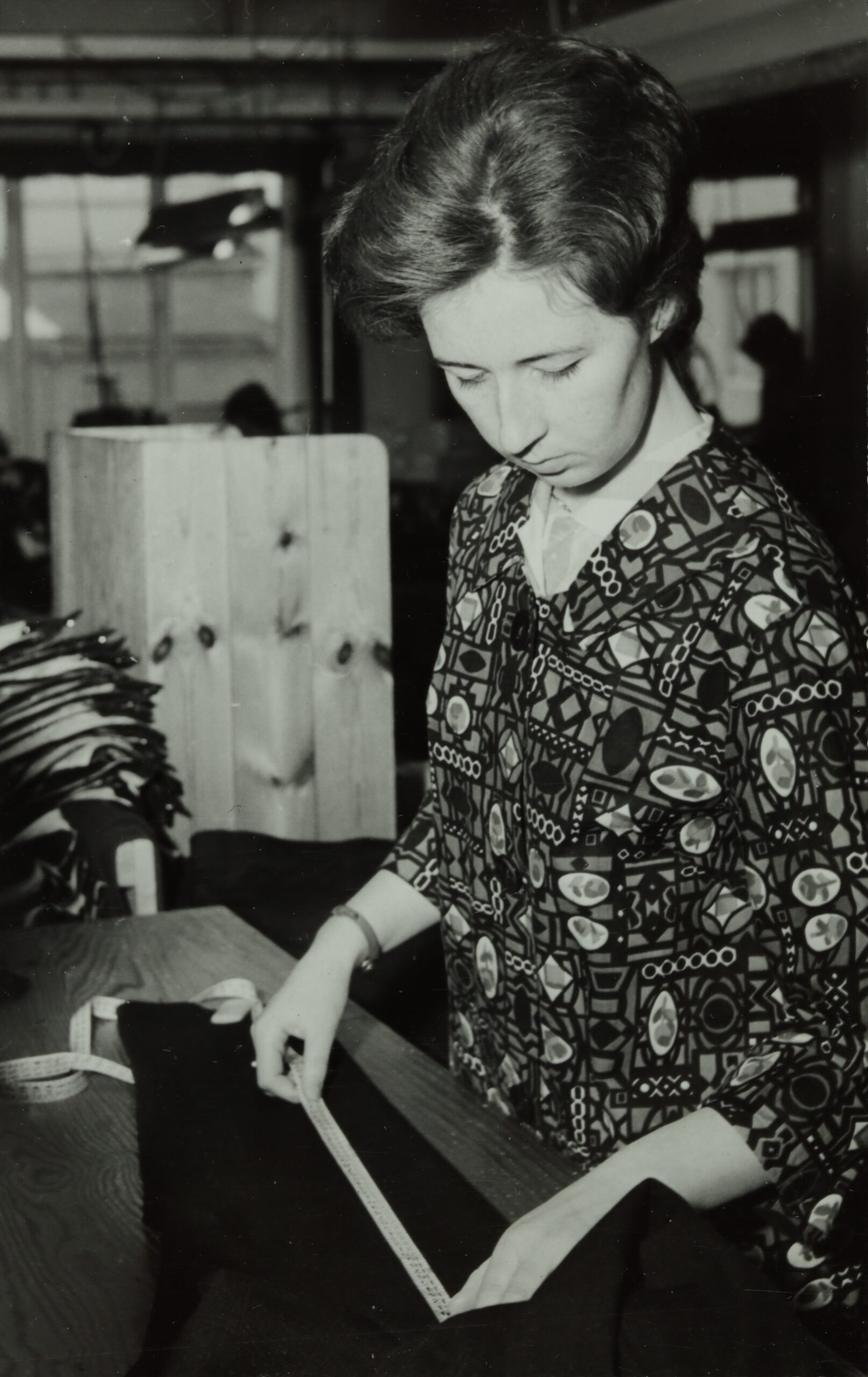 The trousers should of course have a hem, but first Alice Berg measures the correct crotch length in relation to the size, and marks with chalk where the hem tape is to be sewn on.
16
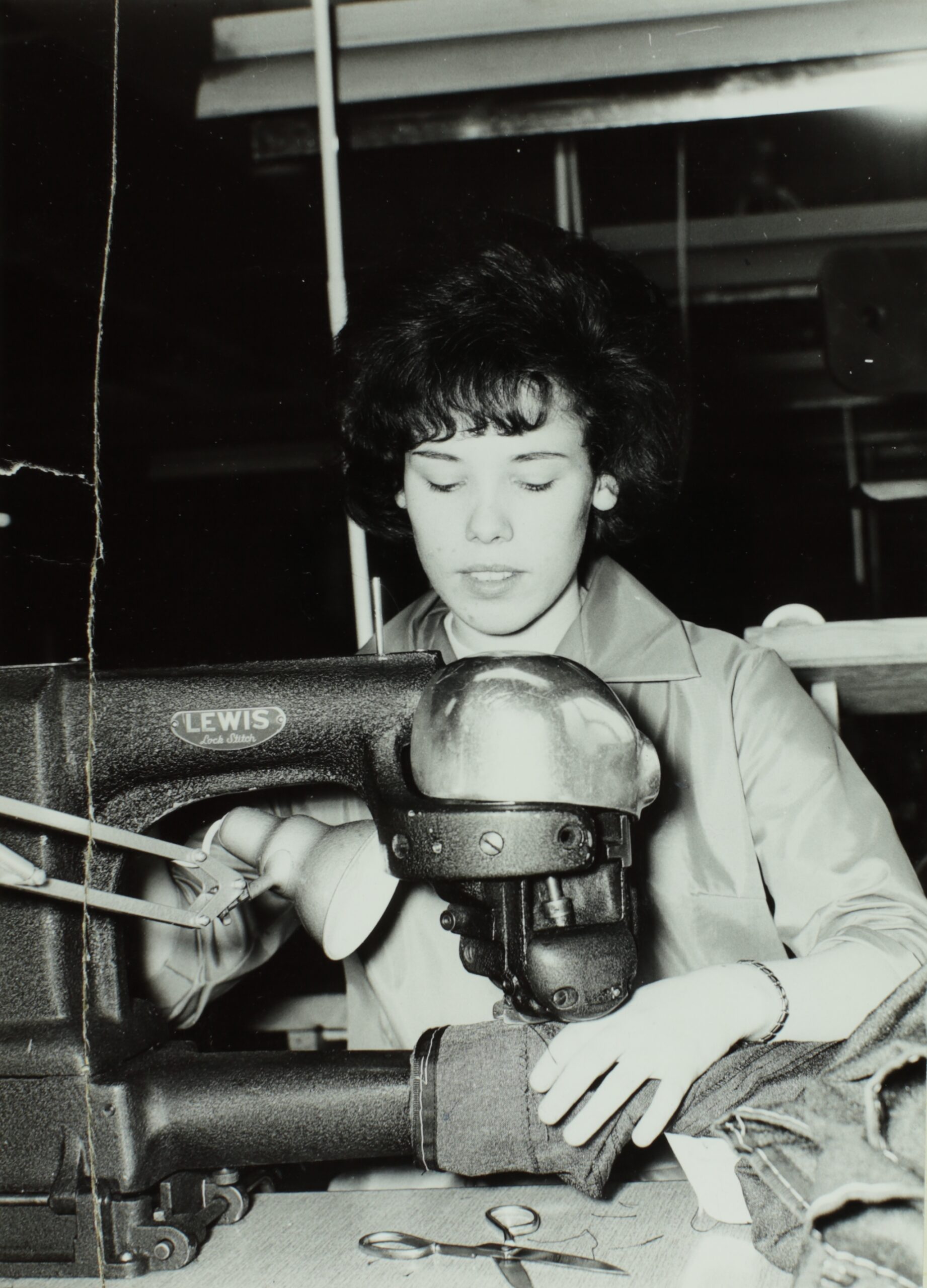 Once this hem is in place, the trousers go to Hilma Hegre, who uses a curved needle machine to sew the tape to the bottom of the trousers.
17
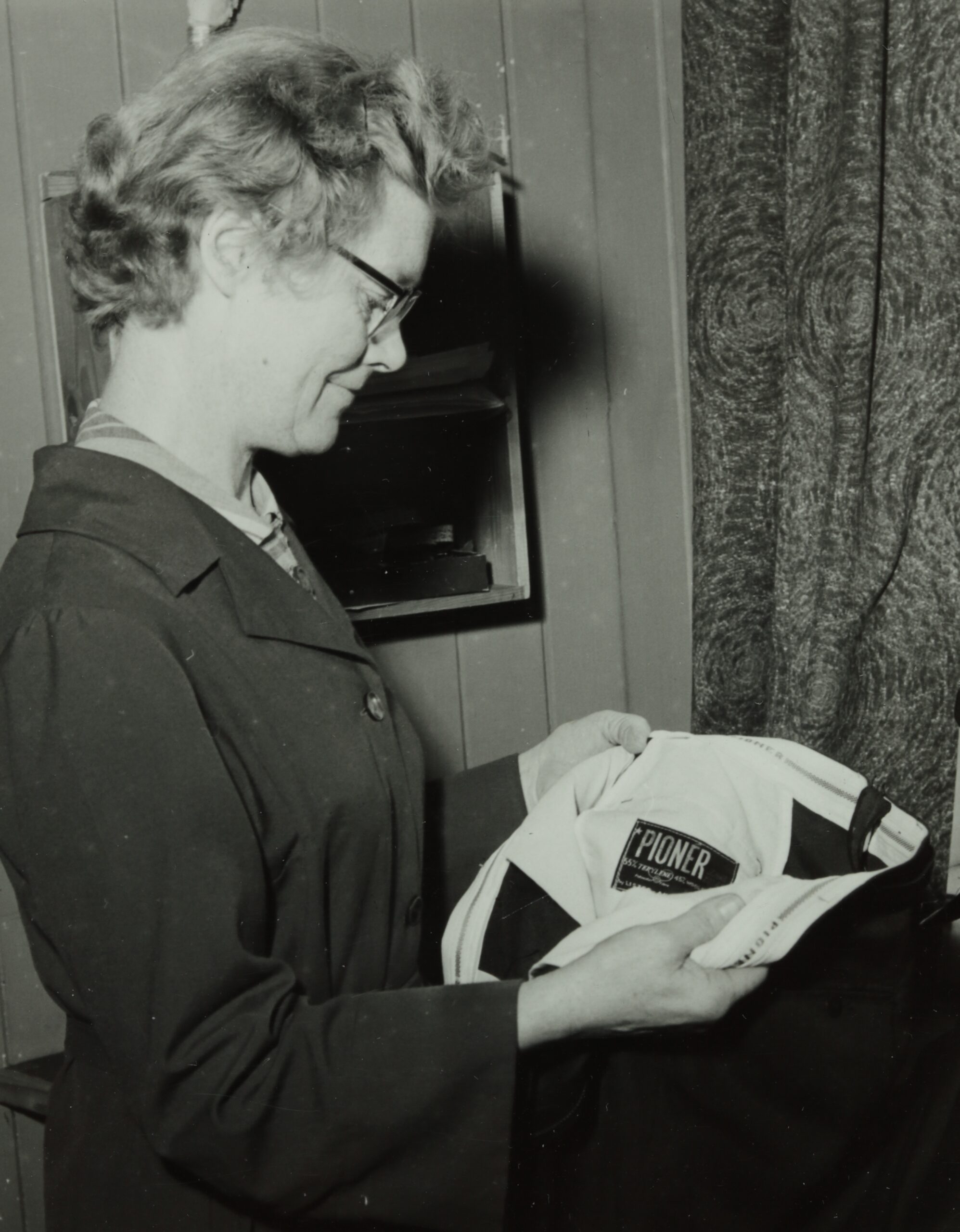 Olga Stensland is the control lady. She takes a close look at our trousers, makes sure there are no faulty seams and takes an extra measurement to make sure the waist width is correct for the size.
18
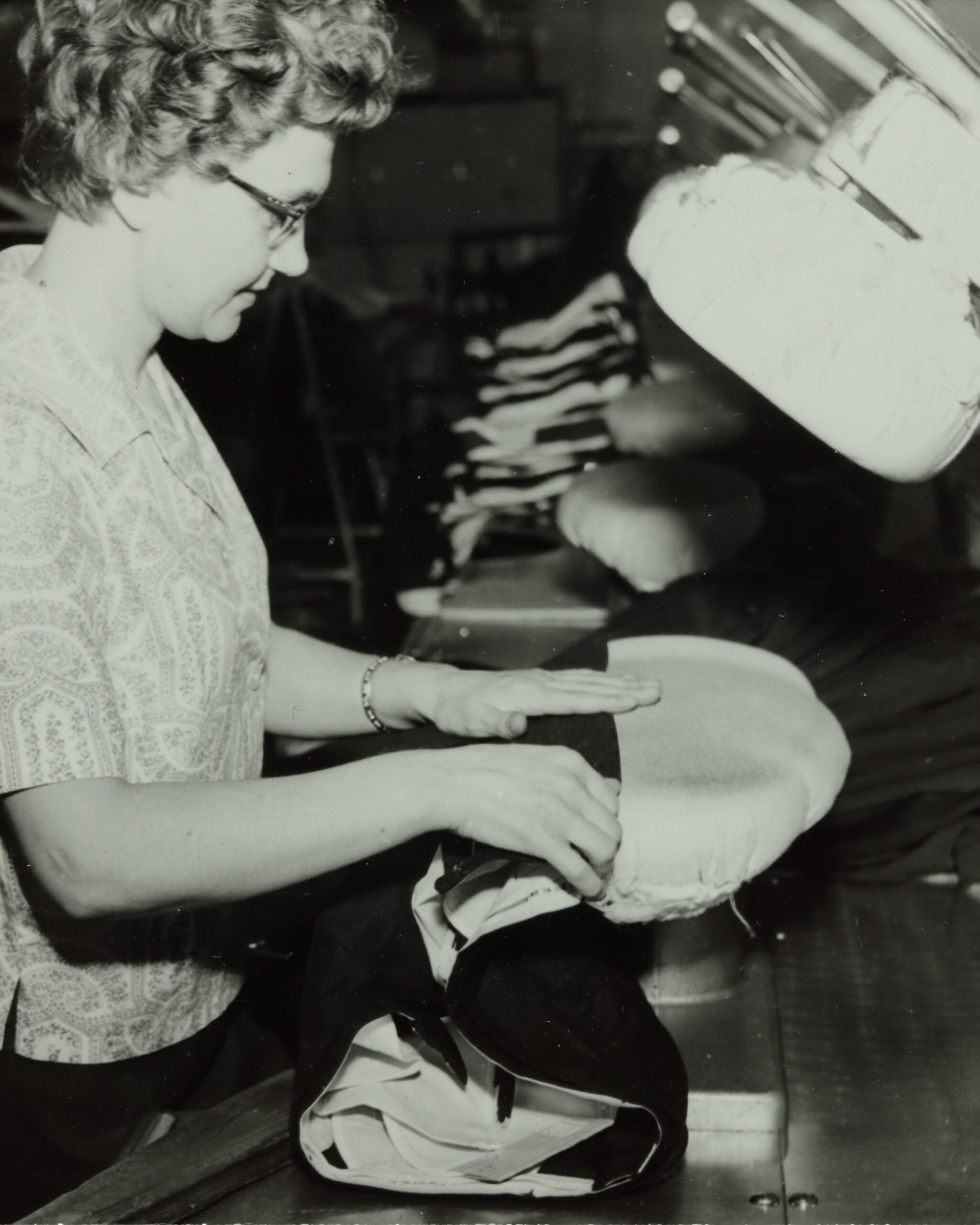 Then we follow the pants to the pressroom, where Birgot Solheim presses it in a couple of steps. In the picture here, she is working on pressing the trousers.
19
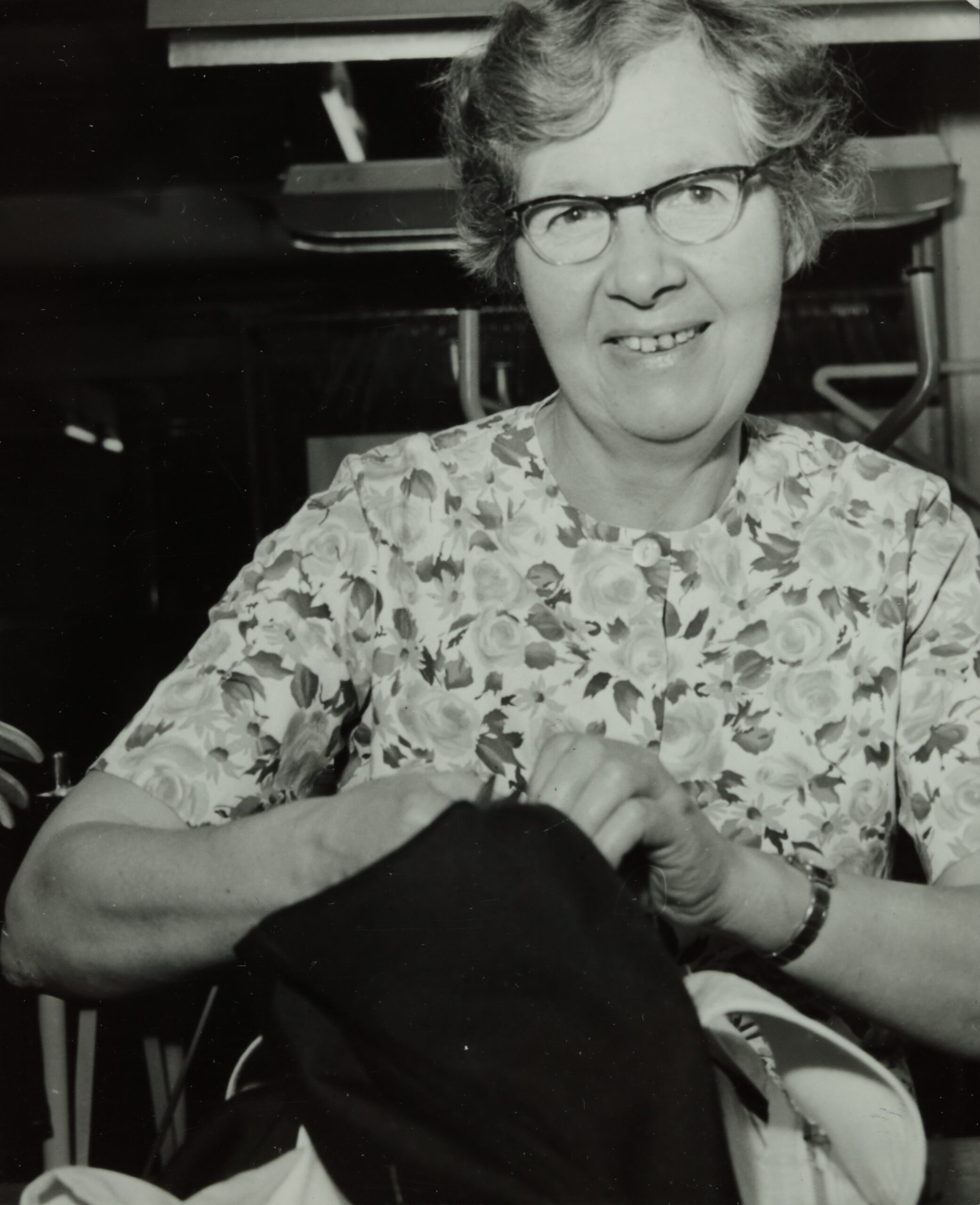 Martha Lindtjørn does the final check. She trims and removes all thread remnants and checks once again that there are no fabric or seam defects.
20
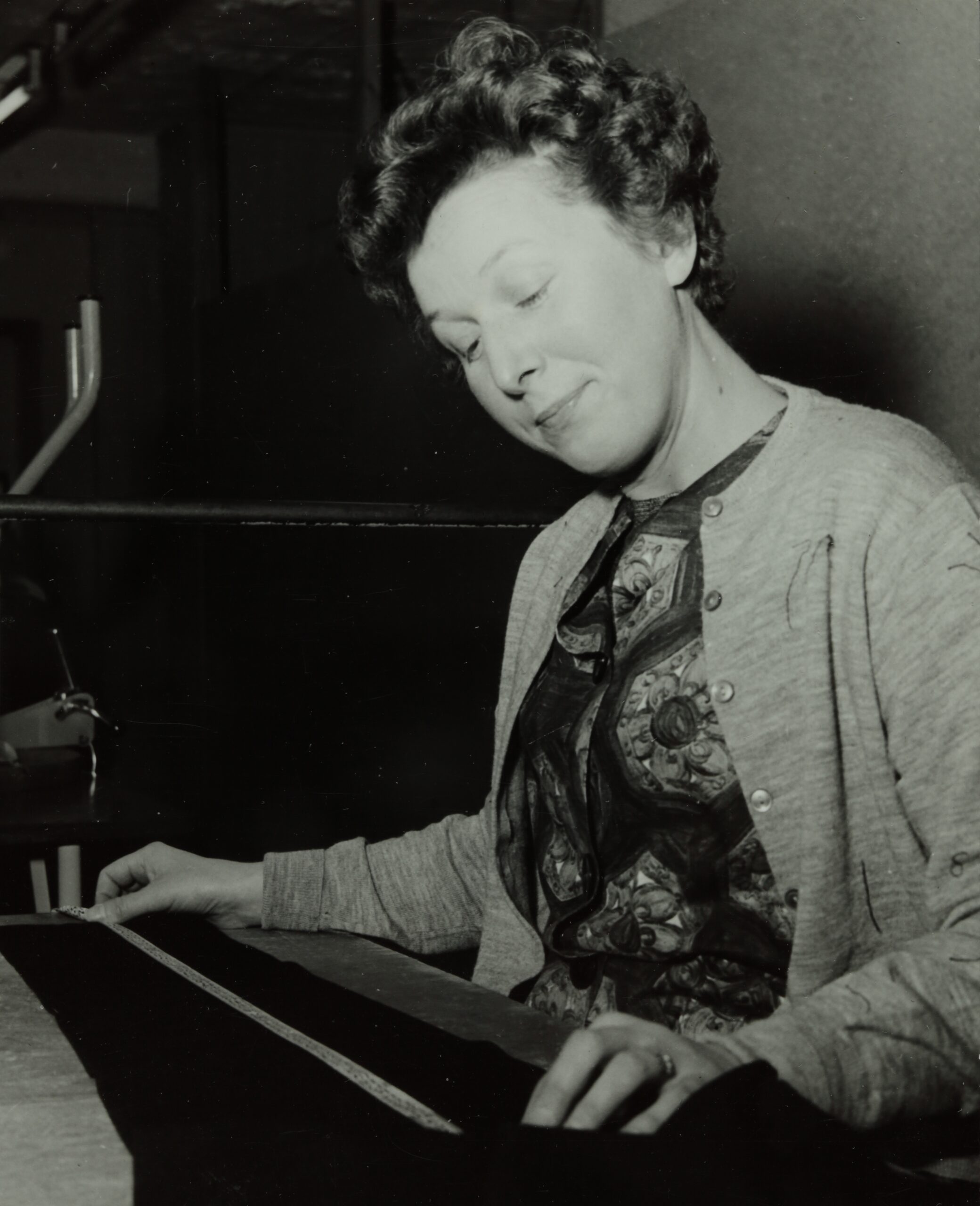 Beate Nærland checks the inner seam length and waist size one last time.
21
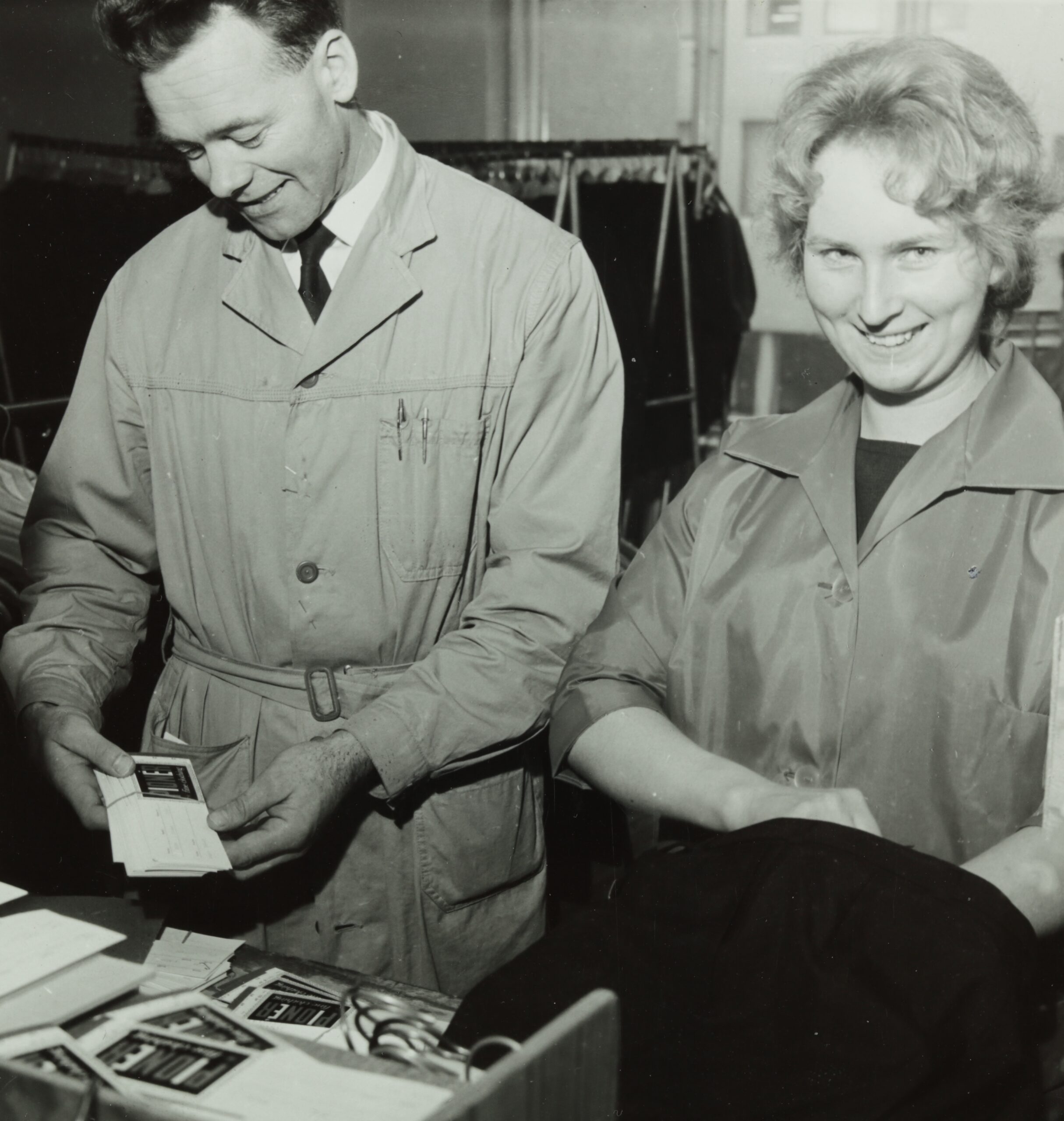 The last step is putting on the labels that tell you these are genuine PIONER trousers, done by Kjellaug Tingvik. Ernst Madland provided the information on the painstaking work and precise control that goes into the finished garment from the garment factory.